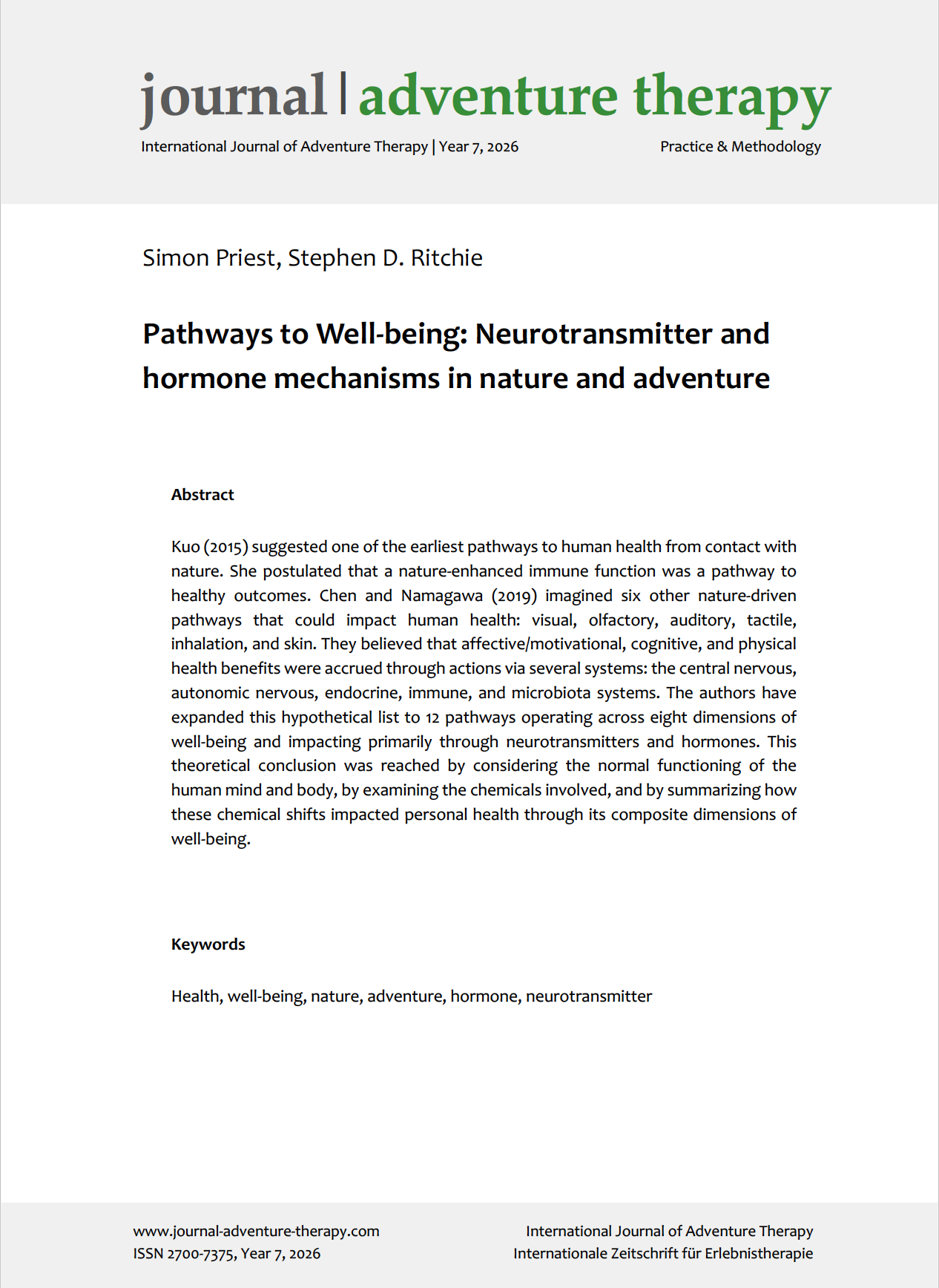
Kuo (2015) suggested one of the earliest pathways to human health from contact with nature. She postulated that a nature-enhanced immune function was a pathway to healthy outcomes. Chen and Namagawa (2019) imagined six other nature-driven pathways that could impact human health: visual, olfactory, auditory, tactile, inhalation, and skin. They believed that affective/motivational, cognitive, and physical health benefits were accrued through actions via several systems: the central nervous, autonomic nervous, endocrine, immune, and microbiota systems. The authors have expanded this hypothetical list to 12 pathways operating across eight dimensions of well-being and impacting primarily through neurotransmitters and hormones. This theoretical conclusion was reached by considering the normal functioning of the human mind and body, by examining the chemicals involved, and by summarizing how these chemical shifts impacted personal health through its composite dimensions of well-being.
Pathways to Well-being: Neurotransmitter and hormone mechanisms in nature and adventure
0,00 €